
General Cell Lines and Cell Cultures


ATCC NCI-BL1395; Lymphoblast; Human (Homo sapiens)
NCI-BL1395 [BL1395] are B lymphoblasts that were isolated from the peripheral blood of a normal 55-year-old, White female donor. This product has applications in immunology.



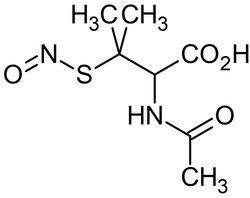
Abcam SNAP, NO donor, 10MG
MW 220.25 Da. NO donor. Vasodilator in vitro and in vivo, that does not induce pharmacological tolerance.
The product is subject to the following: Abcam Restricted Use Statement

iQ Biosciences Purified Cynomolgus Monkey CD3 Pan T Cells, 5M cells/vial
High-quality, high-viability (> 90%) CD3 Pan T cells purified from cynomolgus (cyno) monkey (or macaque) PBMCs by magnetic selection. Highly enriched (typically > 90%) post-selection purity achieved via magnetic isolation. Used for a wide variety of safety assessment and functional assays. All orders come with an iQ Certificate of Analysis.The following donor requests can be accommodated if inventory is available: - Single or multiple donors for a particular product (SKU). Indicate number of vials from each individual donor - Donor-matched PBMCs
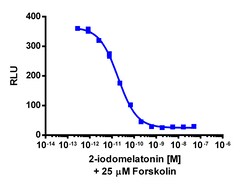
Eurofins Discoverx cAMP Hunter CHO-K1 MTNR1B Gi Cell Line, 2 vials. (95-0056C2)
The cAMP Hunter MTNR1B Gi cell line is a stable, engineered cell line for use in studying drug candidates (small molecules or biologics) targeting GPCRs. This cell line enables assessment of ligand (e.g. melatonin) based activation of MTNR1B GPCR activity via detection of decreasing levels of intracellular cAMP. This product uses EFC technology. The cells overexpress wild type MTNR1B, a naturally Gi/Go coupled GPCR. Upon activation of MTNR1B, the decrease in levels of intracellular cAMP leads to a decreased signal from EFC when the cAMP detection kit is applied. This stable modified cell line is provided as two vials of cryopreserved cells. For detailed product information, User Manual and datasheet, visit www.discoverx.com/gpcr.
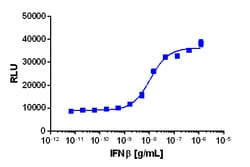
Eurofins Discoverx PathHunter HEK 293 IFNAR1/IFNAR2 Dimerization Cell Line, 2 vials. (93-1097C1)
The PathHunter IFNAR1/IFNAR2 Dimerization cell line is a stable, engineered cell line for use in studying drug candidates (small molecules or biologics) targeting receptor-receptor interaction. This cell line enables assessment of ligand (e.g. IFN-beta) induced dimerization of IFNAR1/IFNAR2 receptors. This product uses EFC technology. The cell line included overexpresses IFNAR2 target protein fused to PK alongside IFNAR1 target protein fused to EA. Upon ligand-induced dimerization of IFNAR1/IFNAR2, detectable EFC signal is produced. This stable modified cell line is provided as two vials of cryopreserved cells. For detailed product information, User Manual and datasheet, visit www.discoverx.com/interleukins.
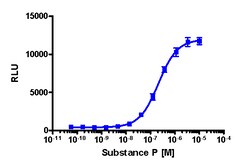
Eurofins Discoverx PathHunter TACR2 Activated GPCR Internalization U2OS Cell Line, 2 vials. (93-0677C3)
The PathHunter TACR2 Activated GPCR internalization cell line is a stable, engineered cell line for use in studying drug candidates (small molecules or biologics) affecting GPCR activation and internalization. This cell line uses EFC technology to measure ligand-induced internalization of TACR2 via detection of localization to the early endosome. The included cell line overexpresses EA-tagged β-Arrestin-2 as well as a ProLink-tagged early endosome protein and untagged TACR2. Upon ligand-induced receptor activation, β-Arrestin-2 is recruited to the activated GPCR and the resulting TACR2-arrestin complex is internalized to the early endosome, leading to production of EFC signal. This stable modified cell line is provided as two vials of cryopreserved cells. For detailed product information, User Manual and datasheet, visit www.discoverx.com/gpcr.
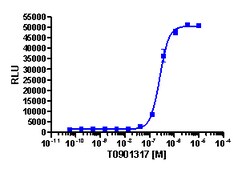
Eurofins Discoverx PathHunter CHO-K1 LXRα Protein Interaction Cell Line, 2 vials. (93-0389C2)
The PathHunter LXRα Protein Interaction cell line is a stable, engineered cell line for use in studying drug candidates (small molecules or biologics) affecting NHR activation and recruitment of cofactors. This cell line enables assessment of ligand (e.g. oxysterols) based NHR activation via detection of SRCP (steroid receptor co-activator peptide) recruitment. The included cell line overexpresses ProLink-tagged LXRα NHR and EA-tagged steroid receptor co-activator peptide (SRCP). Upon activation of LXRα, induced interaction with SRCP leads to production of EFC signal. This stable modified cell line is provided as two vials of cryopreserved cells. For detailed product information, User Manual and datasheet, visit www.discoverx.com/nhr.
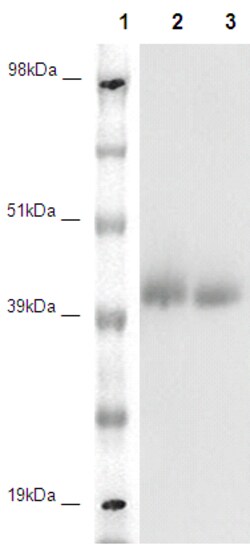
Eurofins Discoverx PathHunter CHO-K1 GPR78 β-Arrestin Orphan GPCR Cell Line, 2 vials. (93-0370C2A)
The PathHunter GPR78 cell line is a stable, engineered cell line for use in studying drug candidates (small molecules or biologics) targeting GPCRs. This cell line enables assessment of ligand based activation of GPR78 GPCR activity via detection of β-arrestin recruitment. The included cell line overexpresses ProLink-tagged GPR78 and EA-tagged β-Arrestin-2. Activation of GPR78 stimulates the recruitment of β-Arrestin-2 and produces EFC signal. This stable modified cell line is provided as two vials of cryopreserved cells. This is an orphan receptor without a known ligand. For detailed product information, User Manual and datasheet, visit www.discoverx.com/gpcr.
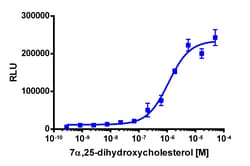
Eurofins Discoverx PathHunter CHO-K1 mEBI2 β-Arrestin Cell Line, 2 vials. (93-0953C2)
The PathHunter mEBI2 cell line is a stable, engineered cell line for use in studying drug candidates (small molecules or biologics) targeting GPCRs. This cell line enables assessment of ligand (e.g. dihydroxycholesterol) based activation of mEBI2 GPCR activity via detection of β-arrestin recruitment. The included cell line overexpresses ProLink-tagged mEBI2 and EA-tagged β-Arrestin-2. Activation of mEBI2 stimulates the recruitment of β-Arrestin-2 and produces EFC signal. This stable modified cell line is provided as two vials of cryopreserved cells. Please note that this product expresses the Mouse version of this protein. For detailed product information, User Manual and datasheet, visit www.discoverx.com/gpcr.
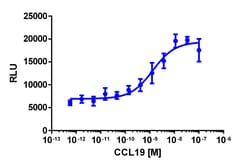
Eurofins Discoverx PathHunter CHO-K1 CCRL1 β-Arrestin Cell Line, 2 vials. (93-0946C2)
The PathHunter CCRL1 cell line is a stable, engineered cell line for use in studying drug candidates (small molecules or biologics) targeting GPCRs. This cell line enables assessment of ligand (e.g. CCL19/MIP-3β) based activation of CCRL1 GPCR activity via detection of β-arrestin recruitment. The included cell line overexpresses ProLink-tagged CCRL1 and EA-tagged β-Arrestin-2. Activation of CCRL1 stimulates the recruitment of β-Arrestin-2 and produces EFC signal. This stable modified cell line is provided as two vials of cryopreserved cells. For detailed product information, User Manual and datasheet, visit www.discoverx.com/gpcr.

Sciencell Research Laboratories Human Pulmonary Alveolar Epithelial Cell Lysate, 200 μg, Cell Lysate, Early passage human pulmonary alveolar epithelial cells
Human Pulmonary Alveolar Epithelial Cell Lysate, 200 μg, Cell Lysate, Early passage human pulmonary alveolar epithelial cells
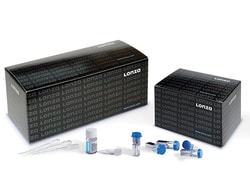
Lonza Walkersville Basic Nucleofector Kit for Primary Mammalian Neurons
In addition to various cell type-specific kits for primary neurons, we also provide a cell group-specific Basic Nucleofector Kit. This kit is suited to determine the optimal transfection conditions for any mammalian neuron type that lacks a cell type specific Optimized Protocol for the Nucleofector 2b Device (or older generations I or II). In a first experiment a selection of different Nucleofector Programs is tested in combination with the Basic Nucleofector Solution for neurons. Benefits:Optimization can be performed within 1 experiment Detailed protocols guiding through the optimization procedure Optional result fine tuning with help of our Scientific Support Team Transfection efficiencies up to 92%Viabilities up to 80%Applications:Kit suited for various neuron types from different mammalian species
Cayman Chemical ApelIn-12humnmouserat1mg
An endogenous agonist of the APJ receptor; induces calcium mobilization in APJ-Gαq16 cells expressing human APJ (EC50 = 0.18 nM); inhibits HIV-1 and HIV-2 infection in NP-2/CD4/APJ cells (mean IC50 = 63 UG/ml); inhibits or stimulates the expression of genes associated with apoptosis, mitosis, and DNA repair in IEC-6 and Caco-2 cells, respectively, at 0.01 µM; induces the production of NO in HUVECs from 100-1,000 nM; increases gastric acid secretion, as well as stomach histamine synthesis and secretion in rats from 20-100 UG/kg; reduces MAP in rats at 15 UG/kg

ATCC Pseudomonas aeruginosa
Pseudomonas aeruginosa strain NCTC 6750 is a whole-genome sequenced bacterial strain that was isolated from urine. This strain produces pyocyanin, pyorubin, and pyoverdin, and it has applications in testing antimicrobial preservatives and opportunistic pathogen research.